Gordon Ramsay: The Underappreciated Icon Who Loves Spain
Gordon Ramsay: The Underutilized Icon Who Loves Spain
Patriotism may play tricks on us. Sometimes we believe that, by having the best products in the world, the world already knows and values them. But that's not the case. Quality alone is not enough if it's not accompanied by strategy, projection, and a good story. And in this, we keep failing.
[caption id="attachment_46441" align="aligncenter" width="600"]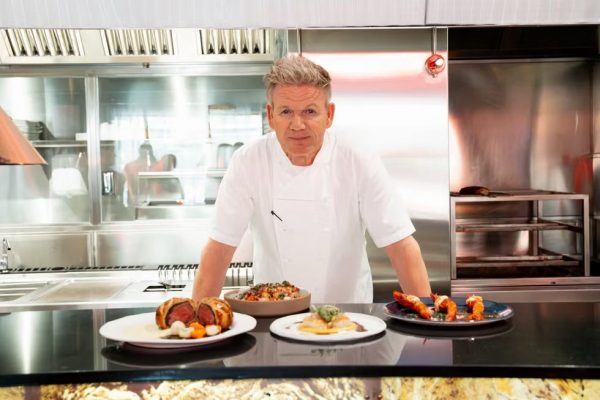 Gordon Ramsay: The Underutilized Icon Who Loves Spain[/caption]
We have gastronomic gems of incalculable value: jamón ibérico, extra virgin olive oil, artisanal cheeses, the vegetables from Navarre's fertile gardens, the fish from the Cantabrian Sea, wines from denominations of origin with history and soul... And yes, also the best meat in the world. Gordon Ramsay said it, not me.
"There is a lot of talk about Japanese Wagyu, but the best meat in the world is Galician".
When the most high-profile and influential chef in the Anglo-Saxon world – with more than 90 restaurants and 17 Michelin stars to his name – says that, it's something to take note of. But in Spain, we still don't.
Gordon Ramsay not only values our products, he uses them. He does so visibly, deliberately, and with a narrative that places them at the highest level. His famous beef Wellington, served at Hell’s Kitchen Ibiza, doesn't use just any meat. It uses the best of the best: supreme Galician beef. Because as a shrewd businessman, he knows that if he's seeking excellence, he must surround himself with the best, no matter the cost. And the customer who understands that pays for it. And returns.
Do our top chefs in Spain do the same? Not always. Too often immediate profitability or opportunism takes precedence over genuine excellence. Where are the restaurants that boast about having the best jamón ibérico and explain it from the pig's genetics to the curing of the piece? How many chefs proudly state which village their olive oil comes from or how that lamb they serve as a main course was raised? Few.
The difference with markets like the United States, the United Kingdom, or Japan is that they do know how to value the exceptional, as long as you explain it to them. They are fascinated by understanding the origin, the process, the time, and the dedication. It's not enough to tell them “this is the best in the world.” You have to show them why.
And when you do, a miracle happens. They stop in their tracks. They tell you:
“Now I understand why it costs what it does! In fact, it seems cheap to me!”
We have spent years working to open the English-speaking market to Spanish gourmet products. And the response has always been the same: fascination. But also surprise, because they had never heard of many things we take for granted. That is our failure: we believe the world already knows us, when we don't even know how to sell ourselves well.
Italy doesn't have the gastronomic wealth or diversity that Spain has. Neither does France. But what they have is a country brand built on vision, unity, promotion, and shared pride. They don't sabotage each other. They don't compete between regions. They play as a team. And they win. Why don't we do the same?
We have a golden opportunity. If someone like Gordon Ramsay, who moves millions of followers, who sets global trends, who chooses Galician products for his signature dishes, has not yet been named Hijo Predilecto de Galicia, then we are doing something wrong.
Where are the public officials who should see these kinds of collaborations as a direct route to internationalizing our gastronomy? Where is business vision within the administration?
They get lost in Christmas lights campaigns in summer or in repeating empty clichés. You don't have to be an ophthalmologist to see that we're wasting a cheap media opportunity with immeasurable international reach.
Gastronomy is our best ambassador. But it needs us to support it as such.
Sir Gordon Ramsay makes that clear. What about us?
AUTHOR: Israel Romero, CEO of Made in Spain Gourmet.