Spaniards, the worst salespeople in the world
Spaniards, the worst sellers in the world
There is an extraordinary paradox in Spanish gastronomy. And, at the same time, deeply frustrating.
Spain is, without question, one of the great gastronomic powers on the planet. Not only for its cuisine —which already occupies a privileged place in the memories of millions of travelers— but for the richness and diversity of its products. Spain is a land of edible landscapes: vast dehesas, centuries-old olive groves, generous seas, cheese-making mountains, and orchards that have defined the flavor of the Mediterranean for centuries.
Anyone who has been to Spain knows it. Anyone who has eaten in Spain remembers it.
Foreigners speak nostalgically of their tapas routes through Galicia, the Basque Country, or Madrid; of unforgettable dinners in Catalan, Andalusian, or Asturian restaurants; of markets where every stall seems like a declaration of love for the product. In Spain you eat extraordinarily well. And best of all: with a naturalness that in other countries seems almost miraculous. However, when someone leaves Spain intending to take that treasure to the world… something unexpected happens. Success is not guaranteed. In fact, very often the opposite occurs.
The biggest enemy of Spanish gourmet products
There is a deeper problem that is rarely pointed out with the necessary clarity: Spaniards are, probably, the worst sellers in the world of our own products. Not because we don't know how to sell. But because many times we don't believe enough in what we have. And that lack of conviction is devastating. Instead of betting on what makes us unique —quality, origin, tradition, the product— far too often we choose the easy route: competing on price. We want to sell the dish. The recipe. The name. But what's inside… doesn't necessarily have to be the best. If it's cheap, better. Because —they say— the customer won't notice. And that's where the tragedy begins.
When everything looks the same
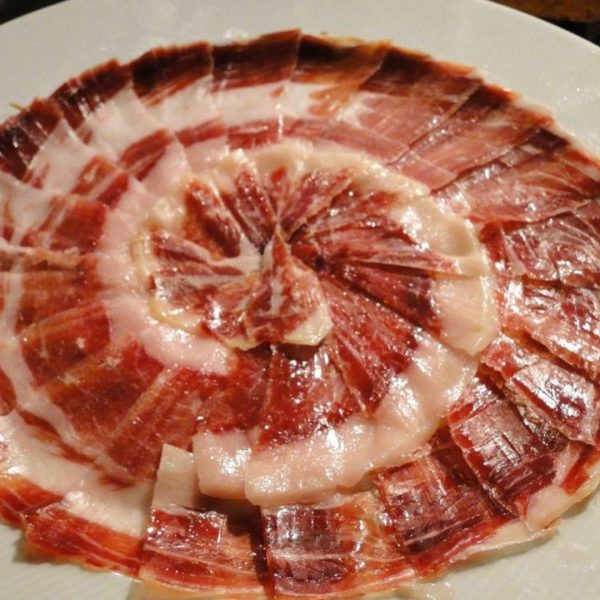
A Cantabrian anchovy is not just any anchovy. A 100% acorn‑fed Iberian ham is not a cebo Iberian nor a 50% hybrid. An extra virgin olive oil from an early October harvest is not the same as an oil produced in December. A Manchego PDO cheese is not an industrial sheep’s cheese that uses the name without belonging to its origin. A pure Spanish honey has nothing to do with the sugary syrup that comes from markets where traceability is a fiction. These differences exist. They are deep. They are cultural. They are gastronomic. But if we don’t explain them, they cease to exist in the consumer’s mind. And then everything becomes a simple question of price.
Selling is not the same
Spaniards want to sell. That is obvious. But selling is not the same as SELLING.
When the only argument is margin or price, when no one takes the time to explain the origin, the producer’s work, the difference in quality… the Spanish gourmet product loses its soul. And then something paradoxical happens: Spanish brands find more obstacles than allies in those who should be their main defenders.
The market isn’t born educated
There is a deeply mistaken idea in the gastronomic sector:
Believing that the market already understands the value of things. It’s not like that. The market is educated. It is educated through professionals who explain, who convey, who defend the product with knowledge and conviction. If no one explains why a ham costs what it costs, its true price will never be paid. If no one explains what sets a great extra virgin olive oil (EVOO) apart, its value will never be understood. If no one talks about origin, the land, the producer, the time required to make a great food… the consumer will only see a number on a label. And they will choose the cheapest.
The worst part: when the resistance comes from home
The most surprising thing is not hearing these objections in foreign markets. It also happens in Spain. And many times they come from Spaniards. “That ham is expensive.” “They give me anchovies cheaper.” “They won’t pay for that oil.” “The customer won’t value it.” Real comments. Heard too many times. And then you ask yourself:
Are we crazy?
Or have we simply forgotten the value of what we have?
The Italian example
There is something the Italians understood decades ago. Made in Italy is not just a label. It is a national strategy. They believe in their products. They protect them. They explain them. They defend them. And that collective conviction has built one of the most powerful gastronomic brands in the world. It’s not a coincidence. It’s work.
The risk of missing the train
Spain has an extraordinary pantry. One of the richest on the planet. But if we keep reducing the conversation to price, if we keep sacrificing quality to enter the market, if we keep thinking the consumer “won’t notice”… We will never advance as a global gastronomic brand. Because competing on price always leads in one direction: the loss of value.
The road ahead
There is, however, another way to do it. An approach based on knowledge, outreach, and honest advocacy for the product. An approach that understands that true gastronomic luxury is authenticity. That is the spirit that drives projects like Made in Spain Gourmet: to create a channel where premium Spanish products find their natural place in the world. But for that to happen something more than good products is needed. A collective conviction is needed. Producers. Distributors. Restaurateurs. Communicators. All working in the same direction.
The true recipe
There is no magic formula. Only a clear decision: to believe in what we have and tell the world about it with pride. Because Spanish gourmet products don’t need to be disguised. They just need someone to tell their story.
And to do so with the passion it deserves.
AUTHOR: Israel Romero, CEO of Made in Spain Gourmet.